福建下石村橋上書屋 2010年Aga Khan 建筑獎大獎
當閱讀這個作品的中文介紹時,最后一行字,讓小編大為感動,久久不能平靜。
這行字的內容是:造價 65萬元
問:這個世界為什么總是存在著美好?!
答:在眾多原因中存在這樣一條:有一群人對美好生活向往和渴求,這種力量促使這群人不斷的去改變著周圍,即便是一點點改變,也可以引起世界范圍的回響,也可以讓我們的生活大不同。
[page]
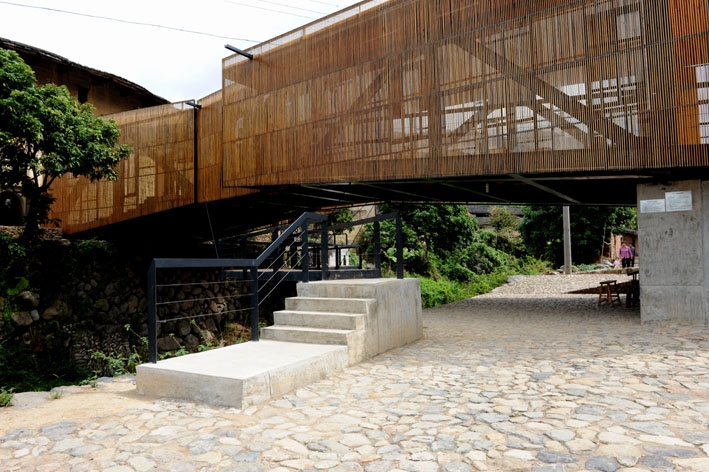
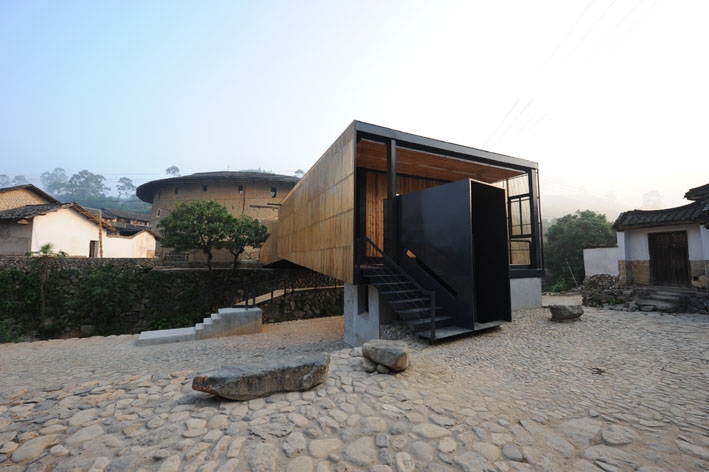
located at a remote village, Fujian Province in China, the project does not only provides a physical function - a school + a bridge, but also presents a spiritual centre. The main concept of the design is to enliven an old community (the village) and to sustain a traditional culture (the castles and lifestyle) through a contemporary language which does not compete with the traditional, but presents and communicates with the traditional with respect. It is done by combining few different functions into one space – a bridge which connects two old castles cross the creek, a school which also symbolically connects past, current with future, a playground (for the kids) and the stage (for the villagers).
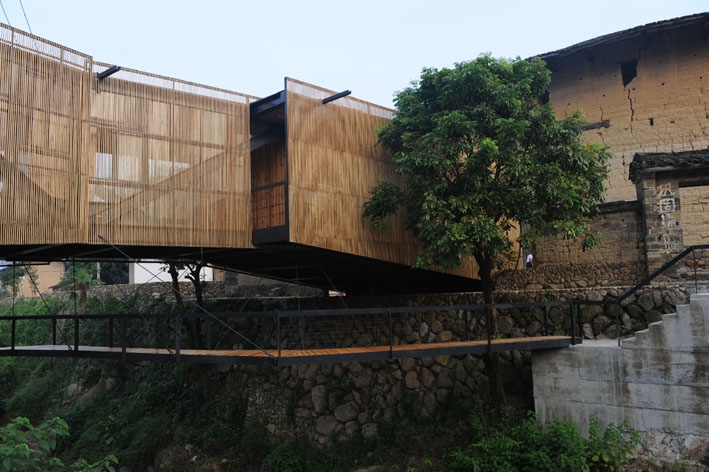
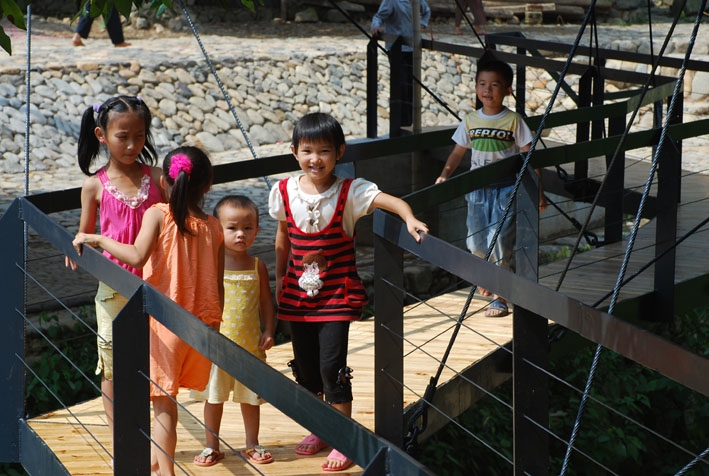
A light weight structure traverse a small creek in a single, supple bound, essentially, it is an intelligent contemporary take on the archetype of the inhabited bridge. Supported on concrete piers (which also has the function of a small shop), the simple steel structure acts like a giant box girder that’s been slightly dislocated, so the building subtly twists, rises and falls as it spans the creek. Inside are a pair of almost identical. Wedge-shaped classrooms, each tapering towards the mid point of the structure (which holds a small public library). Although it’s possible to use the building as a bridge, a narrow crossing suspended underneath the steel structure and anchored by tensile wires offers an alternative and more direct route.
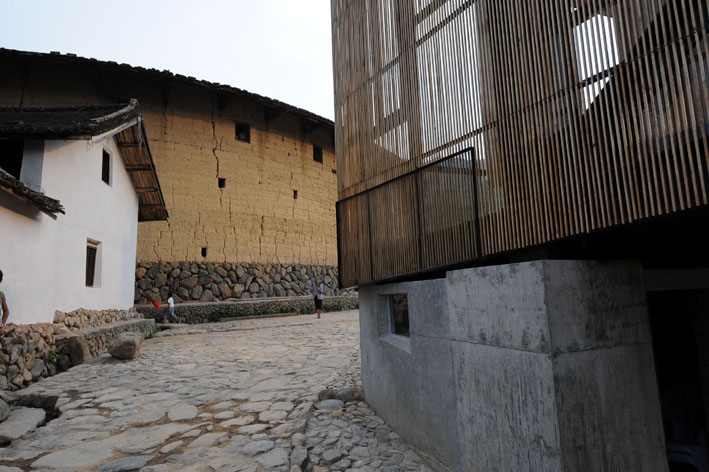
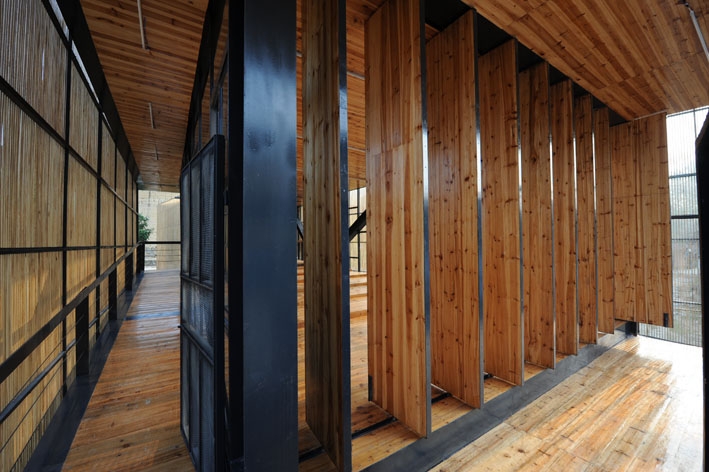
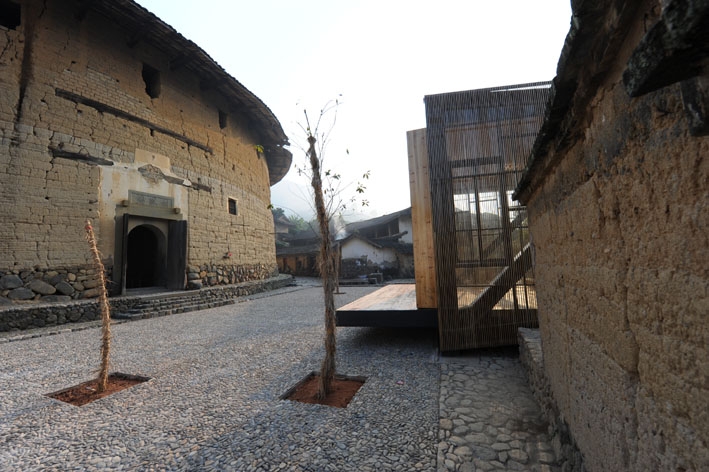
Catalyzing a sense of history, the project is more than just a school, but a social centre of the entire village. Physically lightness and spatial fluidity are keys. By a means of sliding and folding doors, the school can be transformed into an impromptu theatre or play structure. The steel frame is wrapped in a veil of slim timber slats, which filter light and temper the interior with cooling breeze – Fujian, on China’s south-east climate. With an assurance that belies its rustic setting, the new building also acts as a foil to the mass and weight of the neighboring historical structures.
Architect: Li Xiaodong
Project team: Chen jiansheng, li ye, Wang chuan, Liang Qiong, Liu Mengjia, Nie junqi
Collaborator: Hedao architecture design (Fujian, Xiamen)
Client: Xiashi Village
Location: Xiashi Village, Pinghe county, Fujian Province, China
Use: School, bridge, playground, theatre, library.
Site area: 1550m2
Bldg. area: 240m2
[page]
兩年前的一次土樓行與這個座落在閩南的村落結了緣。小村落名叫下石村,雖屬同一個村,早年卻是由兩個圓形土樓組成,中間橫跨一條溪水,傳說舊時兩個土樓的家族互為仇敵,遂劃渠為界,互不往來。橋上書屋的概念由此而生。土樓之間,溪水之上,橋與學校,舞臺與場地,意在連接“現在”,“過去”與“未來”。
[page]
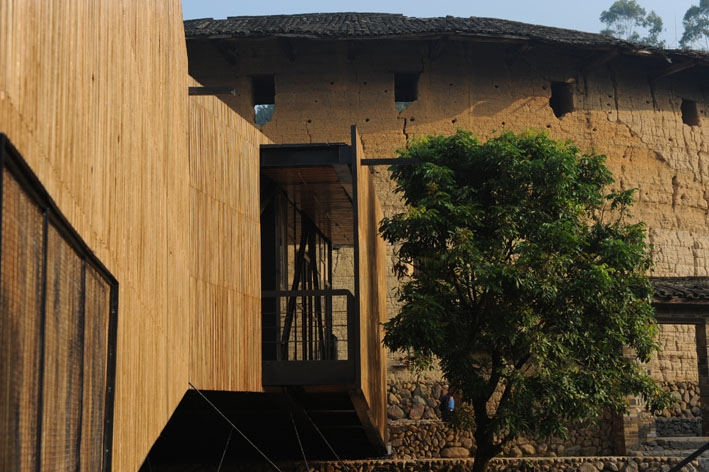
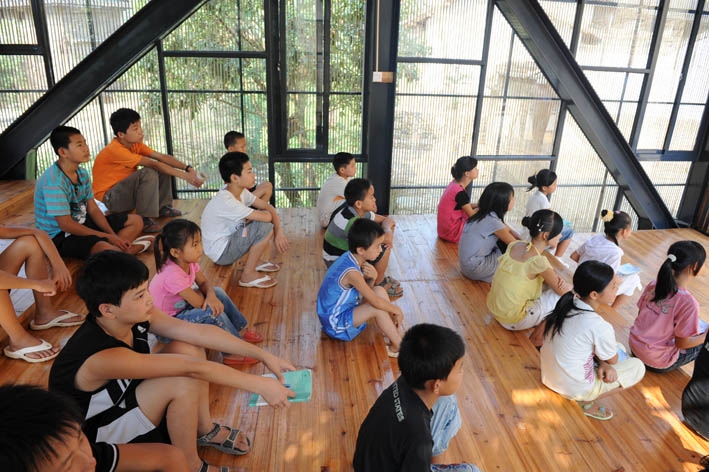
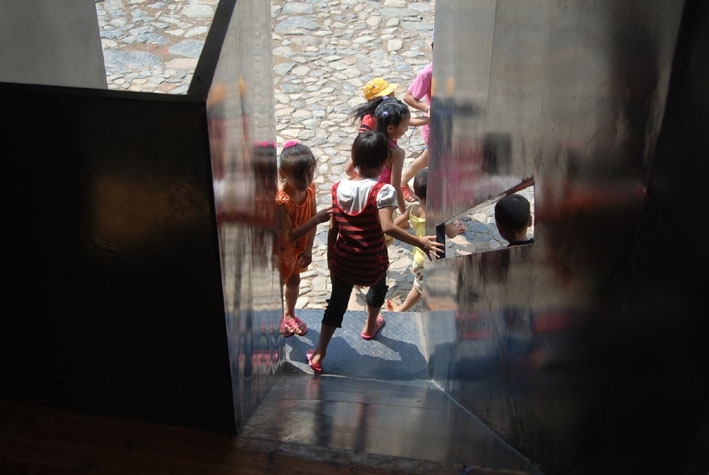
橋上書屋只有兩個班,功能非常簡單卻多樣:兩個階梯教室,一個小圖書館。,兩個舞臺,一個商店,多個功能塊全部安置在橋上,教室單側的走廊通向中間的圖書館,兩個教室在兩端,分別朝向兩個土樓。教室端頭分別設計為轉門和推拉門,使端墻外在課余時間成為兩個可以為住民服務的舞臺。上課時用作黑板和講臺,放學期間村里則在此舉行木偶戲等表演性質的公眾活動。建筑從功能和形式語言上為兩座土樓創造了連接,同時也聯系并重新組織了周邊的空地,為村落提供了很好的公共廣場,廣場一邊是圓形的帶有粗糙痕跡的土樓,另一邊是精致簡練的舞臺,對話雙方的強烈對比使整個空間充滿了張力。每逢傍晚和夜里,這里就聚集了村里自發活動的人群。這樣的設計不僅為孩子們提供了學校教室,解決了交通聯系問題,而且為整個村帶來了交流的中心。
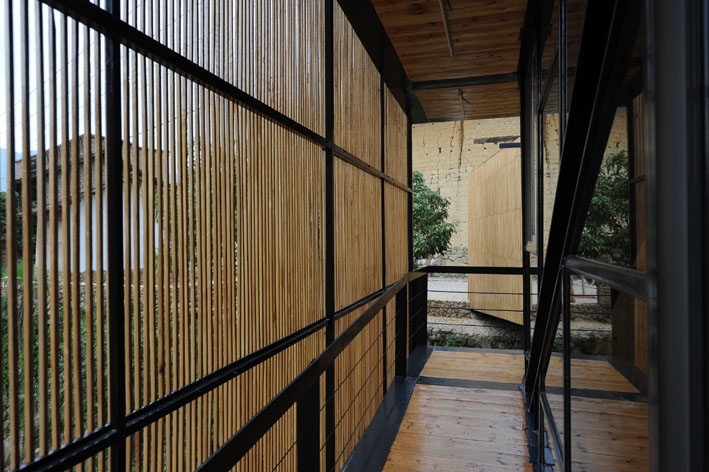
在傳統的語境下進行建筑設計,其形式語言往往會陷入兩種極端,一種是夸大并沉迷于當代技術的表現,另一種是強調原發,流連在工業化以前的懷舊情緒。在橋上書屋的設計中,我希望通過謙遜而現代的技術語言尋求一種介于兩種極端之間的方式。 整個建筑采取鋼桁架結構,桁架內部的整體空間作為主要的教室用途,兩個教室中間設置公共空間。教室外側設置走道,在教室和表皮之間增加一道視覺通廊。外表面采用10×15@20的木條格柵,用鋼龍骨固定。如薄紗一般的表皮處理使室內的視線與行人之間不發生干擾,同時遠處溪水的風景又可以暢通無阻的進入到室內。下部用鋼絲懸吊過河的公共橋梁,橋梁為Z字折線形,避開對兩個端頭廣場的空間沖突,刻意避開了正對廣場的方向。
土樓村落的社區空間古老而又勻質,在這種長期封閉的傳統秩序自我生長而形成的白板(Tabula Rasa)上,橋上書屋表達了一種點狀介入的概念。其針對這種封閉體系與現代生活方式的矛盾采取了犀利的“針刺療法”,以現代語言的建筑置于傳統的村落社區空間,以精確和現代感為充滿自發性和手工性質的原生空間注入強心劑,試圖通過刺激整個空間體系的問題關鍵點,使整個系統產生新的活力。從這個角度看,橋上書屋的設計從選址到其著眼點皆超越了小學教室的功能本身,而關注到整個村落的整體空間問題。
[page]
[page]
[page]
建筑師: 李曉東
設計團隊: 李曉東,陳建生 李燁 王川 梁瓊 劉夢佳
施工圖: 福建廈門合道建筑設計有限公司
業主 福建省平和縣崎嶺鄉下石村
贊助人 Susanna Yang,曹剛
地點 福建省平和縣崎嶺鄉下石村
材料 鋼(結構),木質(內裝與格柵),混凝土(基座)
建造時間 2008-2009
造價 65萬元
[page]
版權聲明:
? 凡注明“石材體驗網”的所有文字、圖片、音視頻、美術設計和程序等作品,版權均屬石材體驗網所有。未經本網授權,不得進行一切形式的下載、轉載或建立鏡像。
? 您若對該稿件內容有任何疑問或質疑,請即與體驗網聯系,本網將迅速給您回應并做處理。
點擊右側【在線咨詢】或至電0769-85540808 處理時間:9:00—17:00
石材體驗網部份作品均是用戶自行上傳分享并擁有版權或使用權,僅供網友學習交流,未經上傳用戶書面授權,請勿作他用。