建筑間的縫隙中 完美存在的電梯設計
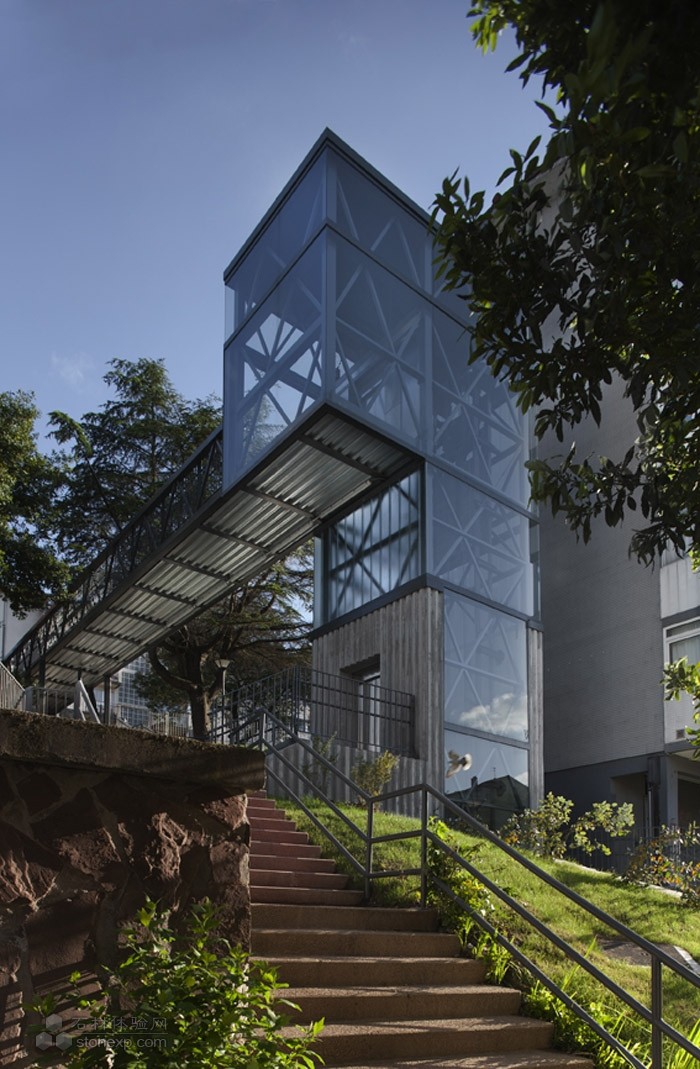
Appreciation towards VAUMM for providing the following description:
[page]
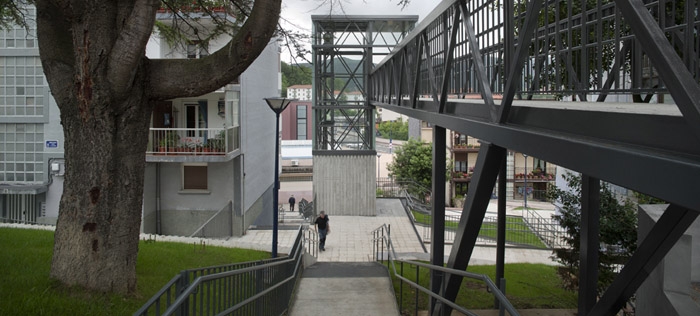

Urbanization and Urban Elevator in Galtzaraborda, Errenteria
In the middle of the 1960’s the industry of the region suffered a great development that led to the
need for labor, generating new neighbourhoods in a short period of time.
These neighbourhoods, as Galtzaraborda, are usually high density areas which often have left
the valley floor and its settlements begin to climb up the mountains.
need for labor, generating new neighbourhoods in a short period of time.
These neighbourhoods, as Galtzaraborda, are usually high density areas which often have left
the valley floor and its settlements begin to climb up the mountains.
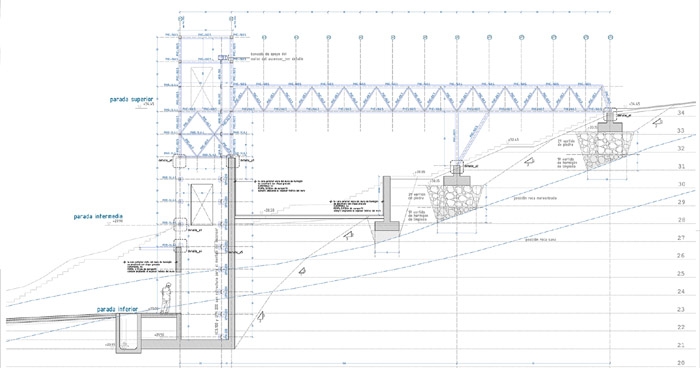
The buildings are placed following the logic of the topographic lines, covering different levels and
creating irregular voids between them that are used to connect at maximum slope different levels.
The void space that concerns us is the natural connection between high levels of housing and
the lower level occupied by the equipment, train station, sports center and nursery.
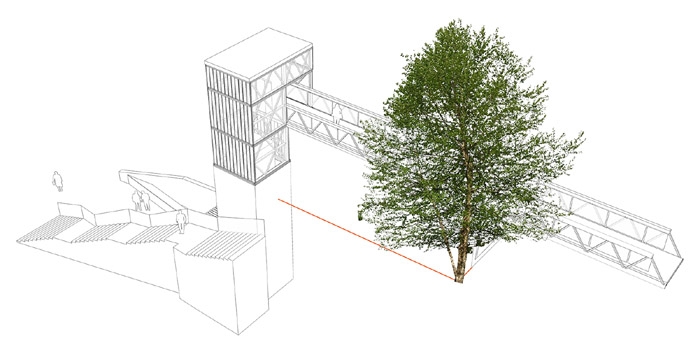
This irregular and casual space is dominated by the presence of a huge tree to be maintained as
a valuable witness of the change process in the neighbourhood.
creating irregular voids between them that are used to connect at maximum slope different levels.
The void space that concerns us is the natural connection between high levels of housing and
the lower level occupied by the equipment, train station, sports center and nursery.
This irregular and casual space is dominated by the presence of a huge tree to be maintained as
a valuable witness of the change process in the neighbourhood.
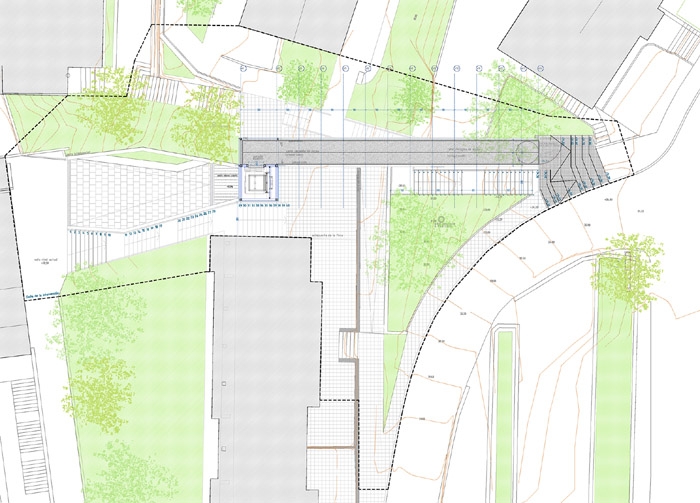
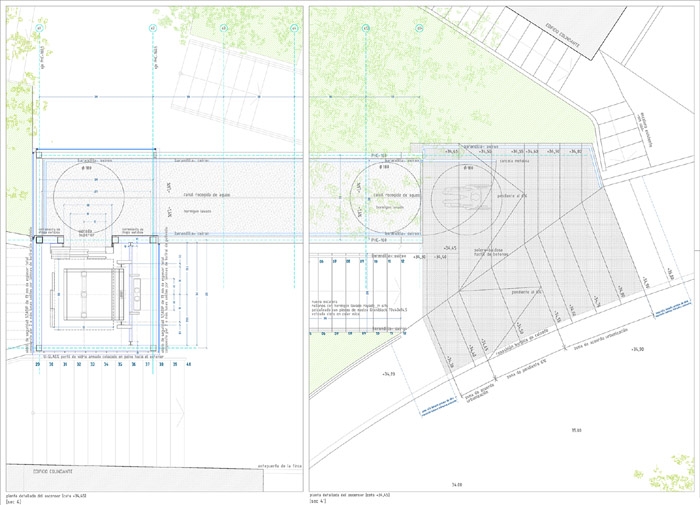
The elevator has been built “in the only place where it could be”, its location is a crossing point
resulting from the rule requiring minimum distances, maintaining the view of site from the houses
around and not exceeding alignments of them.
The second point that determines the shape of the elevator is the position of the gateway bridge
which is misalignment and tangent to the elevator to keep away from the tree, focusing the
pedestrian way in the virtual axis of the void space.
resulting from the rule requiring minimum distances, maintaining the view of site from the houses
around and not exceeding alignments of them.
The second point that determines the shape of the elevator is the position of the gateway bridge
which is misalignment and tangent to the elevator to keep away from the tree, focusing the
pedestrian way in the virtual axis of the void space.
In this position, the gateway does not focus the eye on the door of the elevator, it allows the
visitor to walk trough it with a visual depth much more open and serves as an observation point
on the environment, the distant mountains and the harbour of Pasaia.
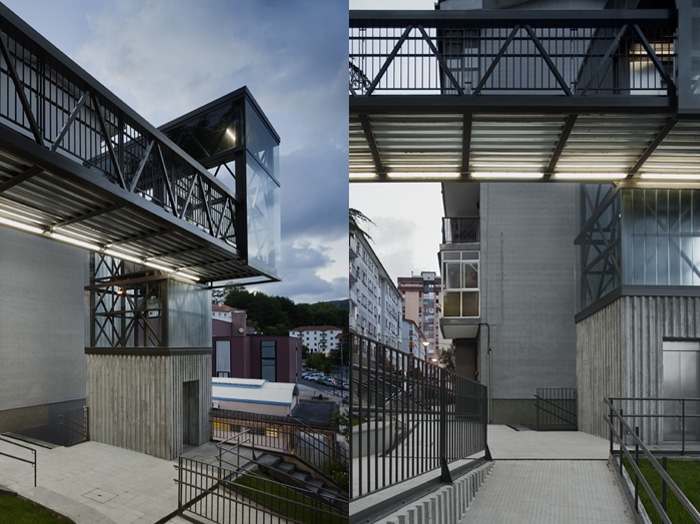
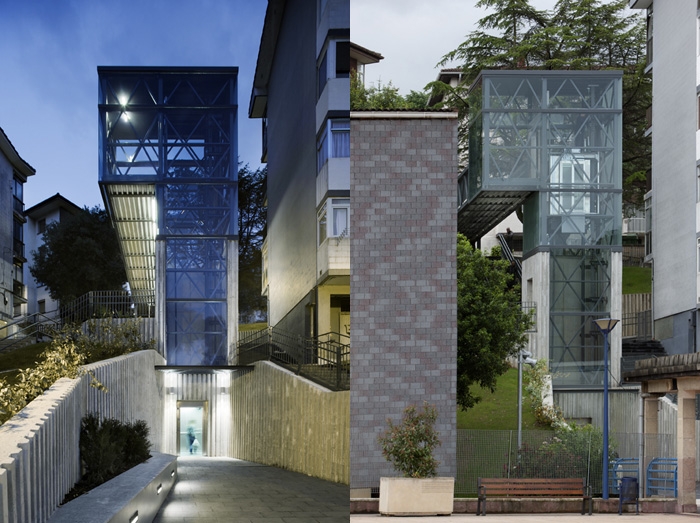
It has sought the maximum slenderness and transparency throughout the element; all pieces
have been designed using rigid steel panels with truss triangulations. The triangulations is the
answer, first, to the structural logic and second, to an industrial language, in this sense, concrete
walls have been form worked with sheet metal casing to provide them the mentioned industrial
character. It is constructed in order to impregnate a sentimental relationship with the industrial
language of the steel manufactures and the harbour that after all gave rise to Galtzaraborda.
visitor to walk trough it with a visual depth much more open and serves as an observation point
on the environment, the distant mountains and the harbour of Pasaia.
It has sought the maximum slenderness and transparency throughout the element; all pieces
have been designed using rigid steel panels with truss triangulations. The triangulations is the
answer, first, to the structural logic and second, to an industrial language, in this sense, concrete
walls have been form worked with sheet metal casing to provide them the mentioned industrial
character. It is constructed in order to impregnate a sentimental relationship with the industrial
language of the steel manufactures and the harbour that after all gave rise to Galtzaraborda.
Architects: VAUMM
Technical Architect: Julen Rozas
Construction: Obegisa
Project: Errenteria Garatuz
Production: City hall of Errenteria
Photography: Aitor Ortiz
Technical Architect: Julen Rozas
Construction: Obegisa
Project: Errenteria Garatuz
Production: City hall of Errenteria
Photography: Aitor Ortiz
[page]
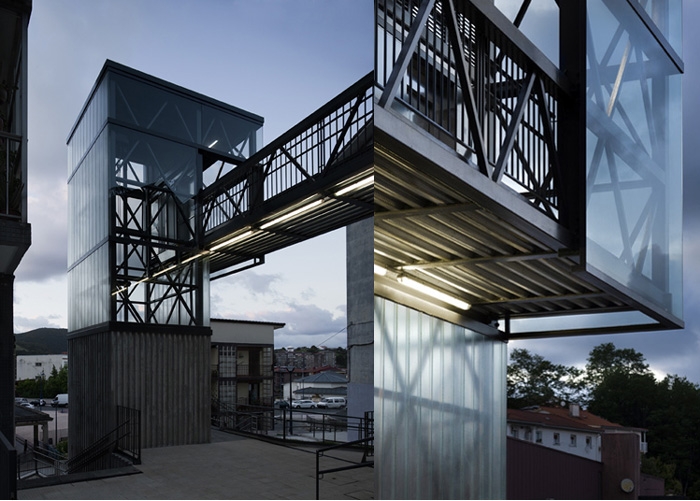
1960年的工業發展導致當地人口增加,出現新興居住區。這些高密度居住區由谷底慢慢向上發展。建筑們根據地形位于不同的層次,坡地使得布局不規則。
建筑師們需要在建筑間的縫隙中設計一個電梯,這里有一顆大樹,成為場地不斷變遷的寶貴見證者。這個電梯是一個交通點,需要處于最合適的位置,同時延展出去的行人交通路線也需要避開場地的大樹。同時將焦點放在行人在使用時對外界環境,遠山,海港的視覺體驗。
設計力求讓其透明,纖細。用三角桁架搭建,這是從結構邏輯以及工業性語言出發考慮。混凝土墻也具有這種工業性。期望這些鋼鐵工業制品能給這片海港中,與工業關系緊密的人們保持情感關聯。
[page]
[page]
More:VAUMM
版權聲明:
? 凡注明“石材體驗網”的所有文字、圖片、音視頻、美術設計和程序等作品,版權均屬石材體驗網所有。未經本網授權,不得進行一切形式的下載、轉載或建立鏡像。
? 您若對該稿件內容有任何疑問或質疑,請即與體驗網聯系,本網將迅速給您回應并做處理。
點擊右側【在線咨詢】或至電0769-85540808 處理時間:9:00—17:00
石材體驗網部份作品均是用戶自行上傳分享并擁有版權或使用權,僅供網友學習交流,未經上傳用戶書面授權,請勿作他用。